Role: UX Designer (Concept)
Timeline: 4 weeks
Project Type: UX Case Study / Social Impact YouBelong Project Overview A compassionate platform helping refugees navigate legal aid, local resources, and community support—designed with empathy and accessibility at its core. YouBelong is a concept-driven UX project that aims to empower refugees with a clear, compassionate, and accessible platform to find vital local resources, legal assistance, and community support. Inspired by my own lived experience as a refugee, this project is a deeply personal response to the fragmented, confusing systems that displaced people often face when starting over in a new country.
Role: UX Designer (Concept)
Timeline: 4 weeks
Project Type: UX Case Study / Social Impact Design Process I used a 5-stage Design Thinking model proposed by the Hasso Plattner Institute of Design at Stanford (the "d. school"). The stages of this Design Thinking process are as follows:
1. Empathize 2. Define 3. Ideate 4. Prototype 5. Test
Refugees arriving in new countries face an overwhelming number of barriers:
- Navigating legal systems
- Finding shelter and basic needs
- Accessing healthcare
- Language and cultural barriers
- Isolation and lack of community
Existing tools are often inaccessible, overly formal, and lack mobile or multilingual support.
- Competitive analysis of NGO and gov platforms
- Empathy mapping based on lived experience
User Personas
Omar, 19, Iraqi student refugee
Omar is eager to continue his studies but lacks access to resources and guidance. He wants to meet people his age, find language support, and connect with mentors to guide him through education options.

Omar is eager to continue his studies but lacks access to resources and guidance. He wants to meet people his age, find language support, and connect with mentors to guide him through education options.
Layla has just relocated with her children. She needs legal assistance with her asylum application and is struggling to find affordable housing and medical care. Her English is basic, and she feels overwhelmed navigating different systems.
All Screens
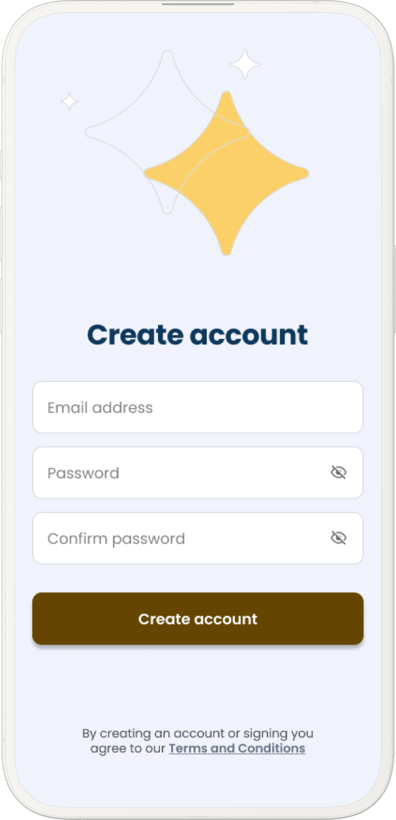

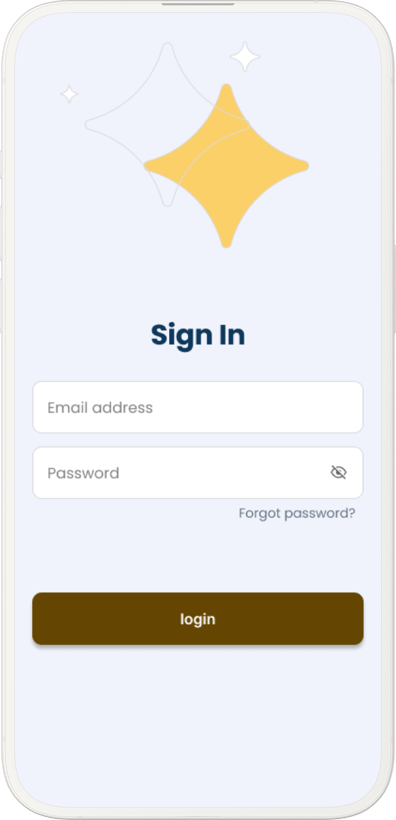
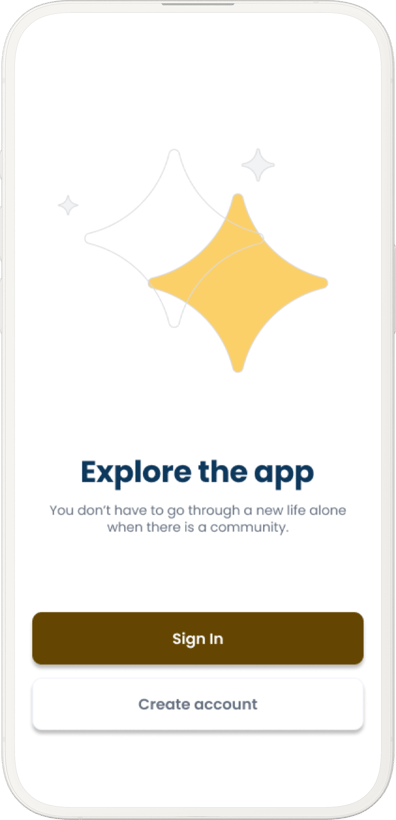
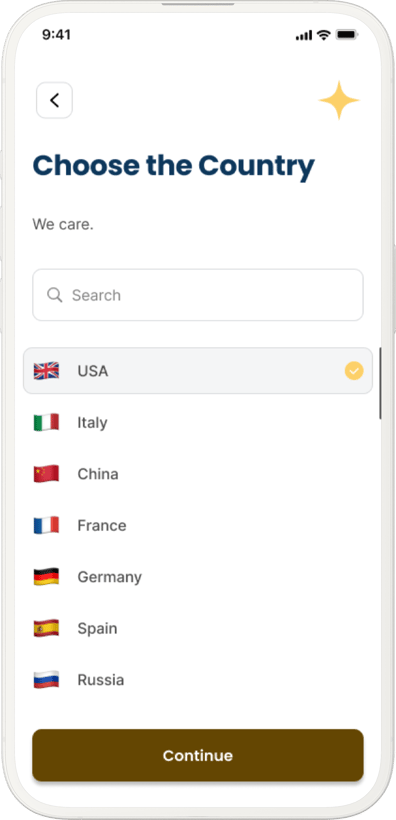
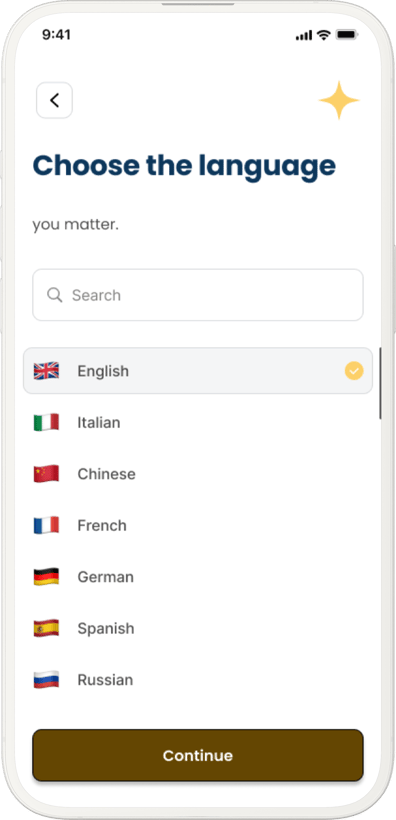
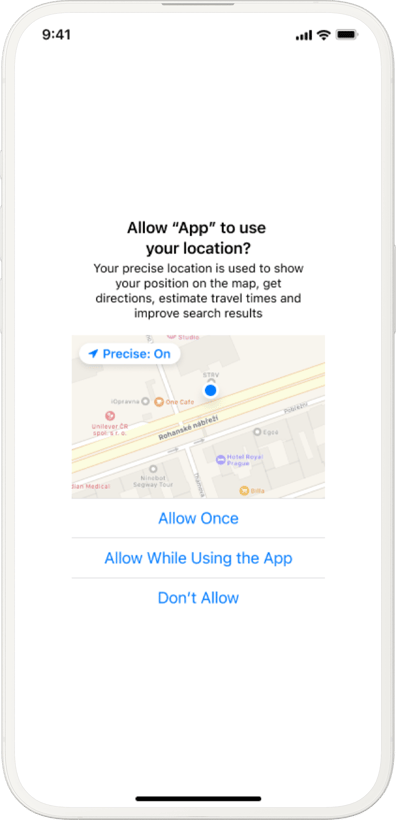
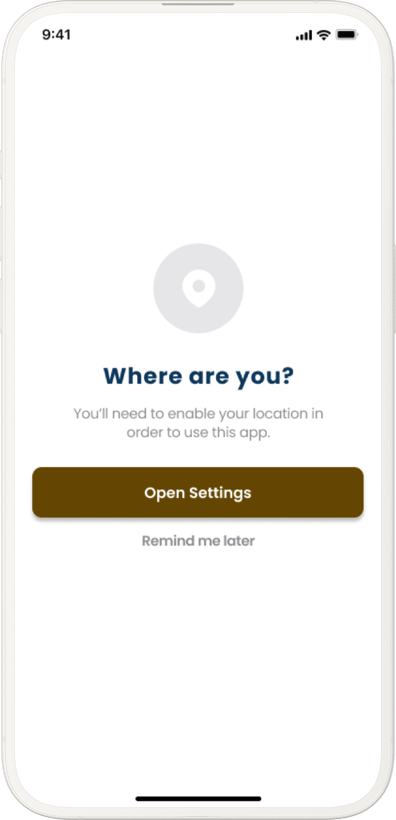
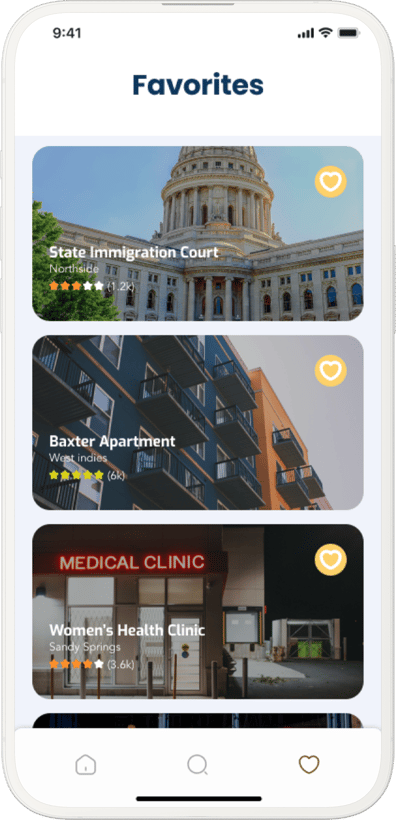
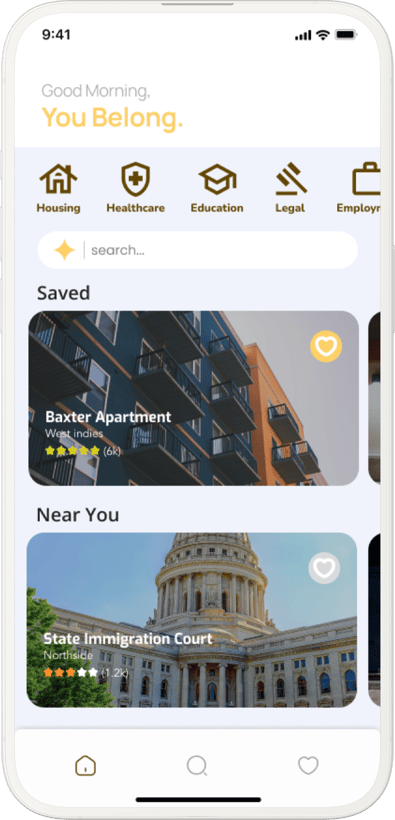
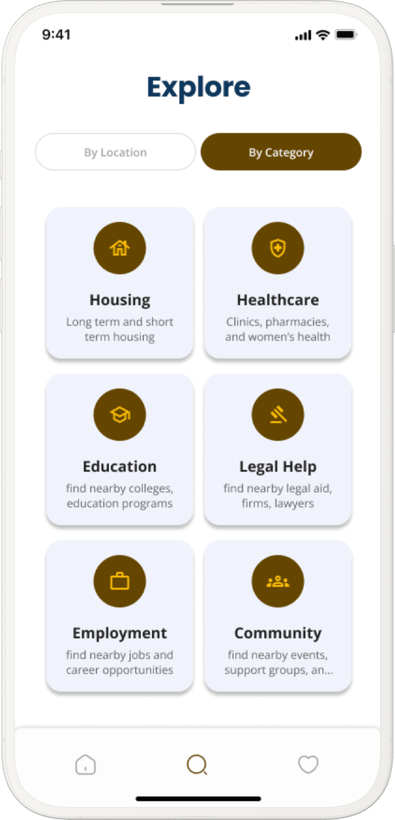
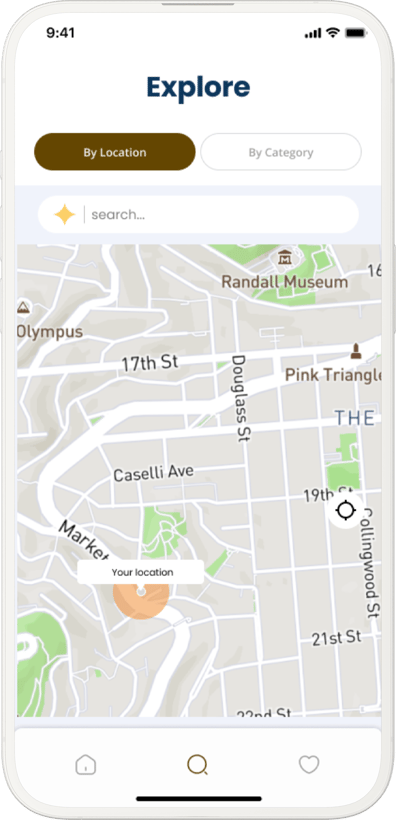
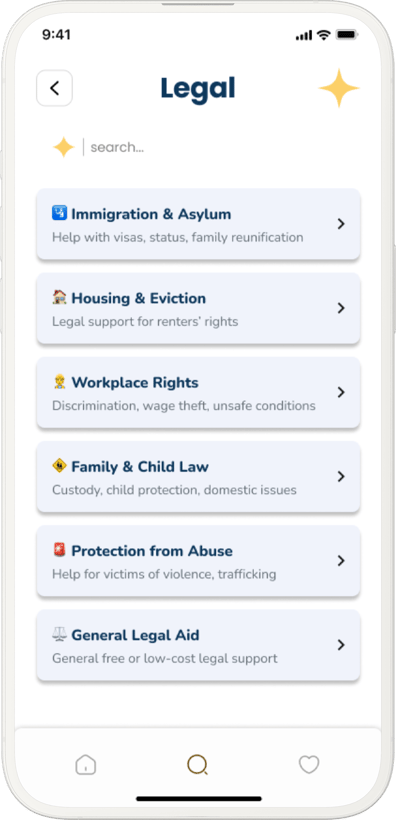
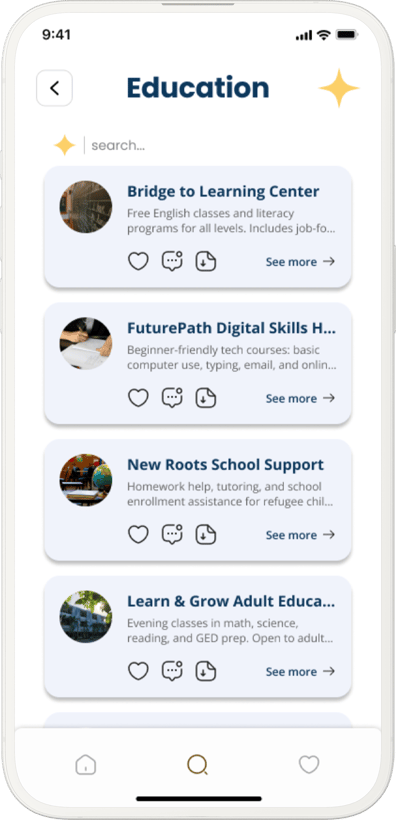
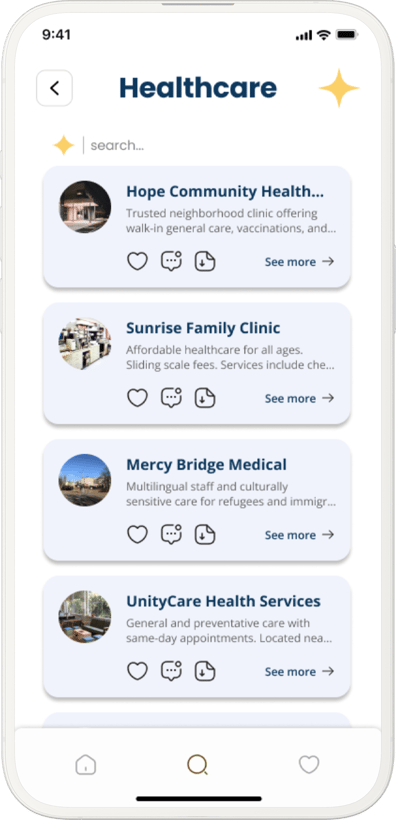
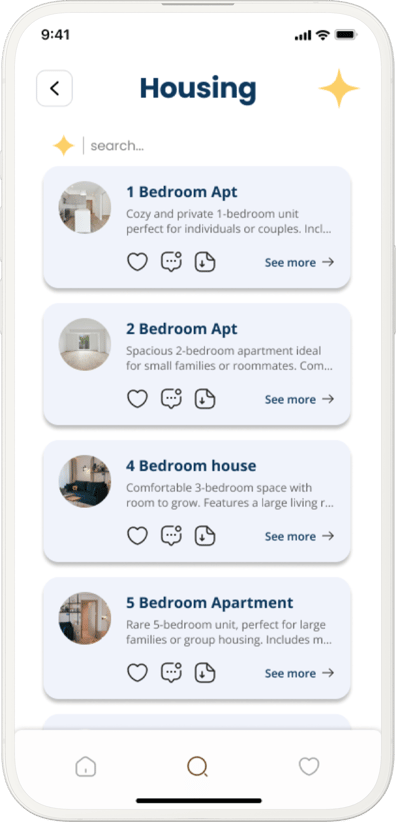
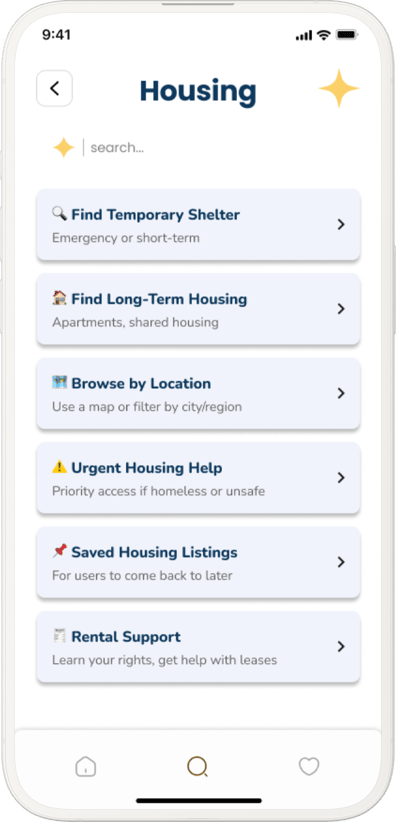
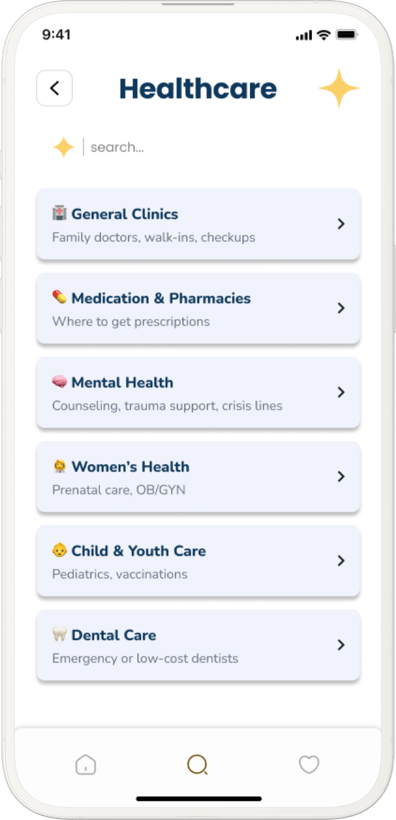
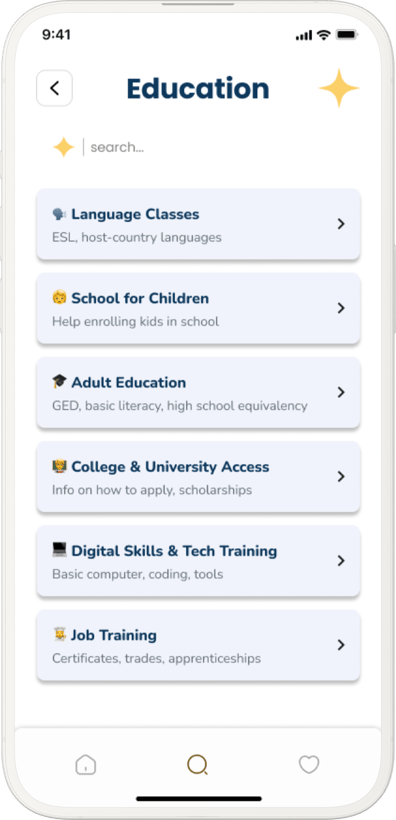
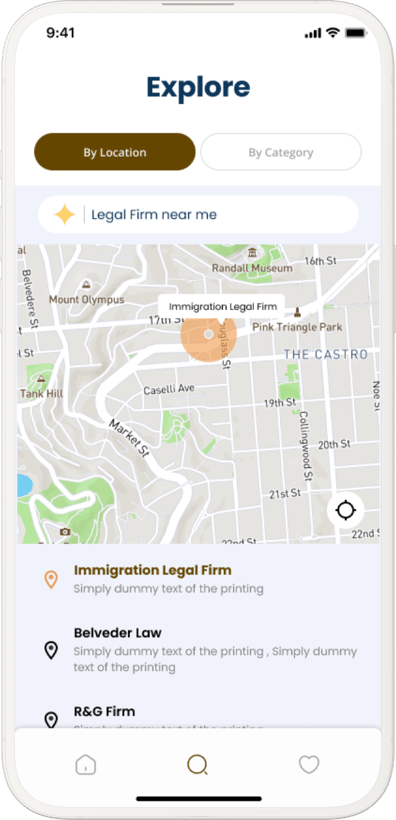
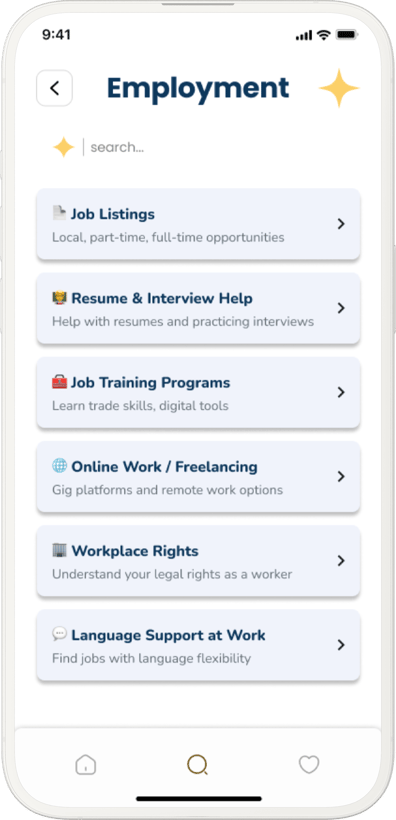
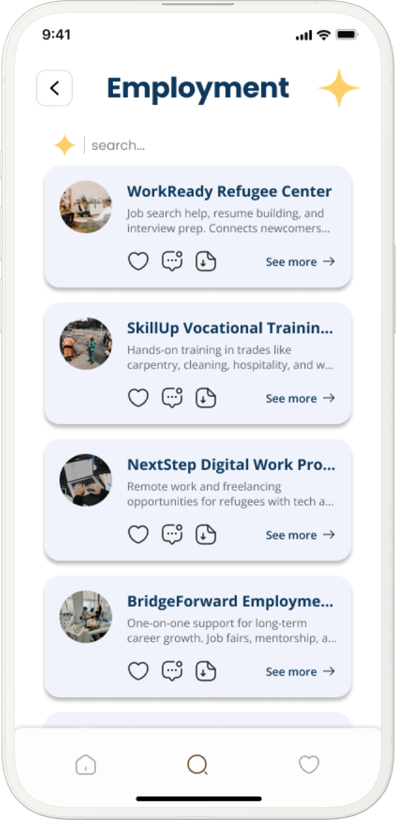
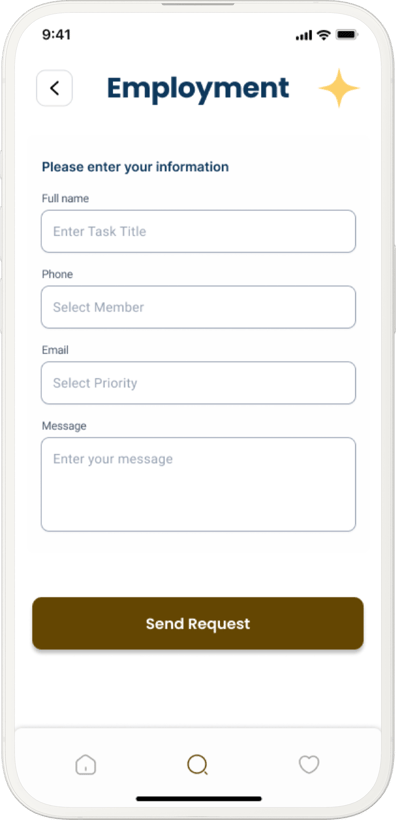
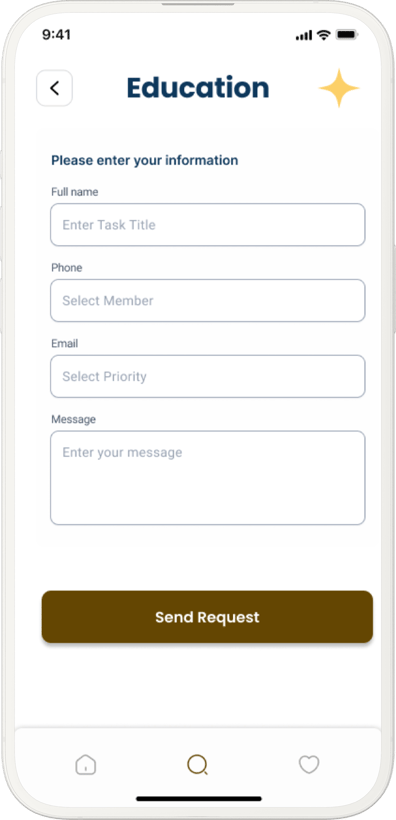
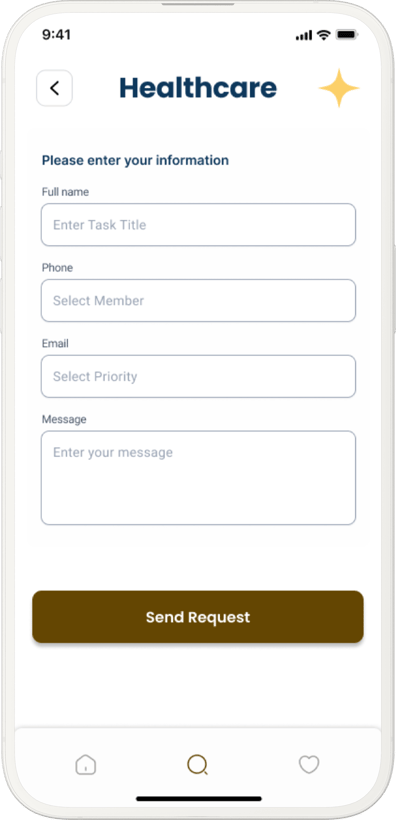
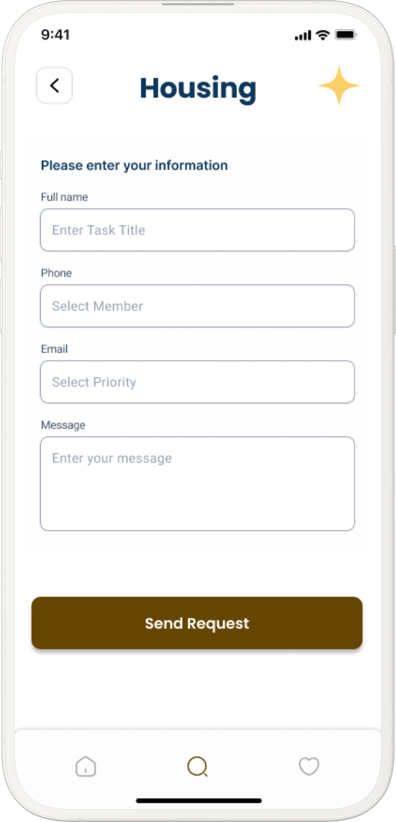
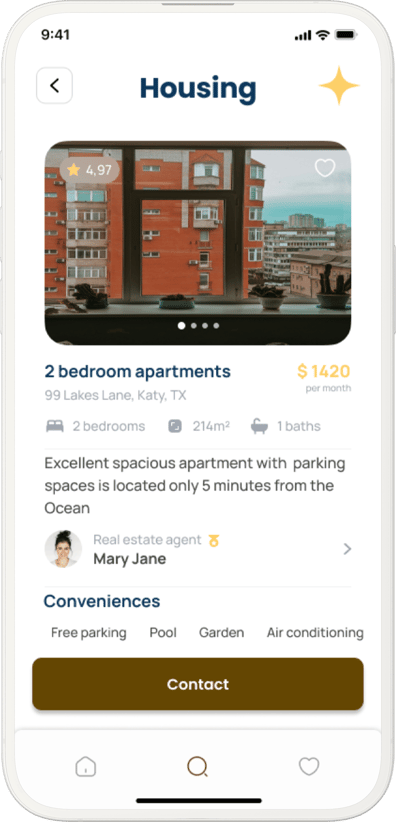
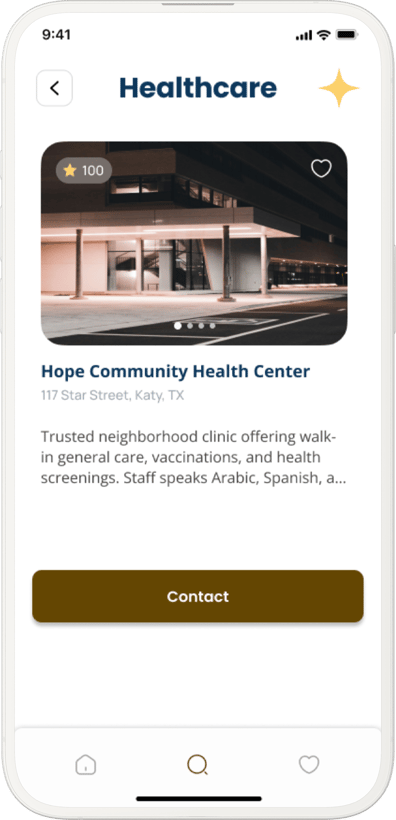
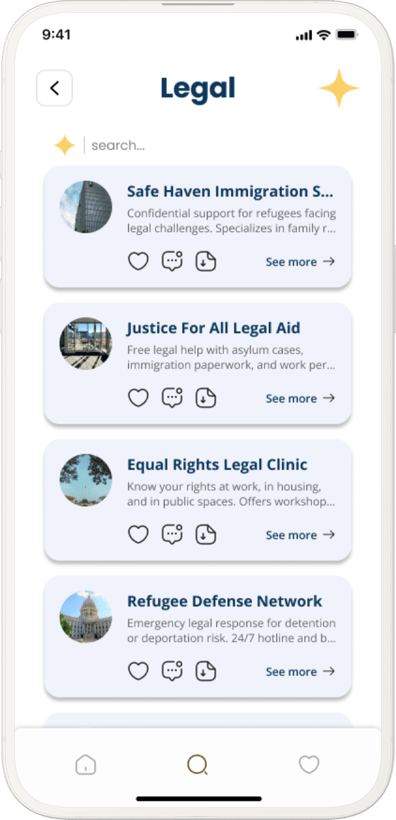
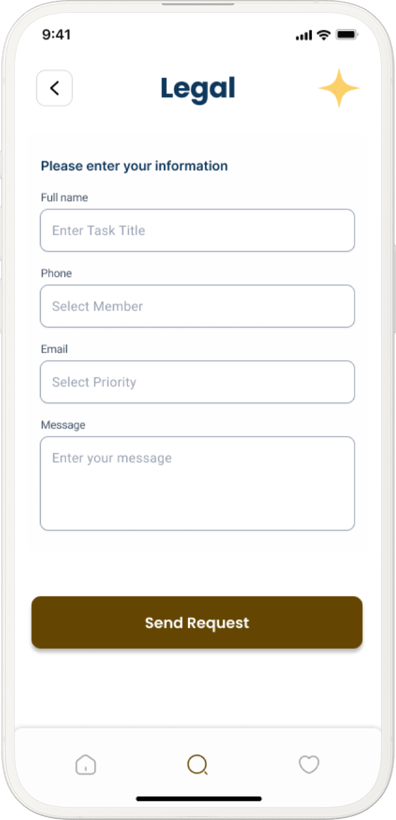
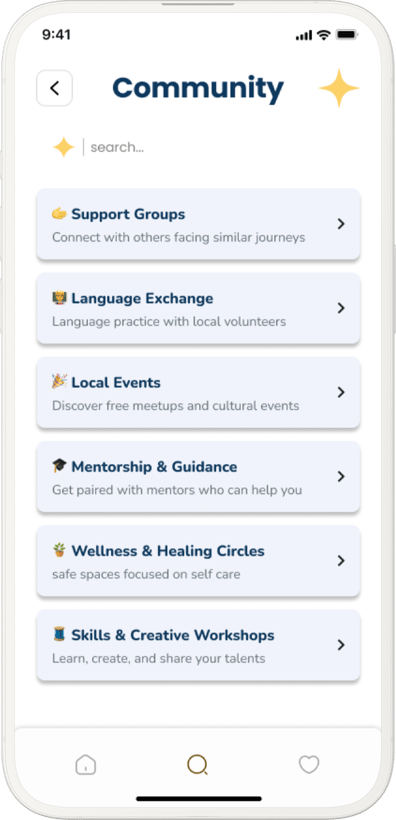
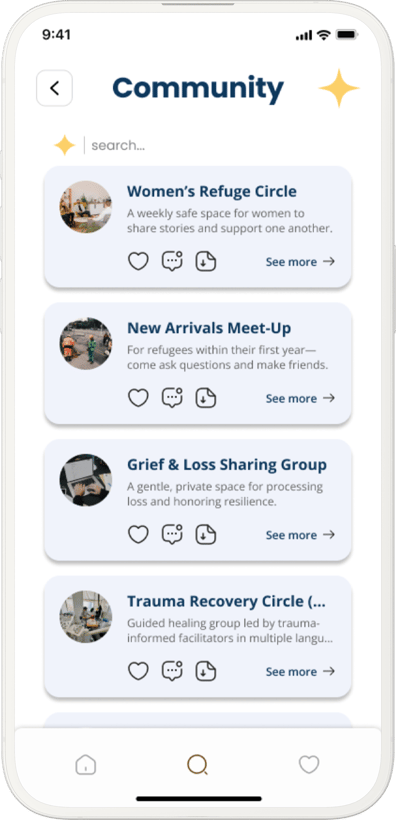
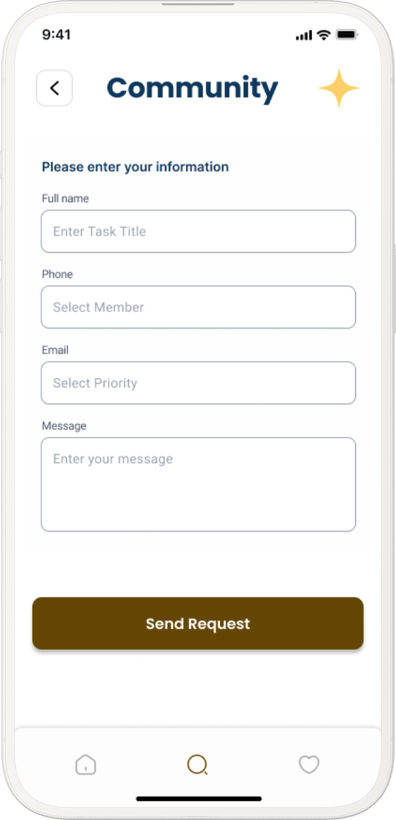
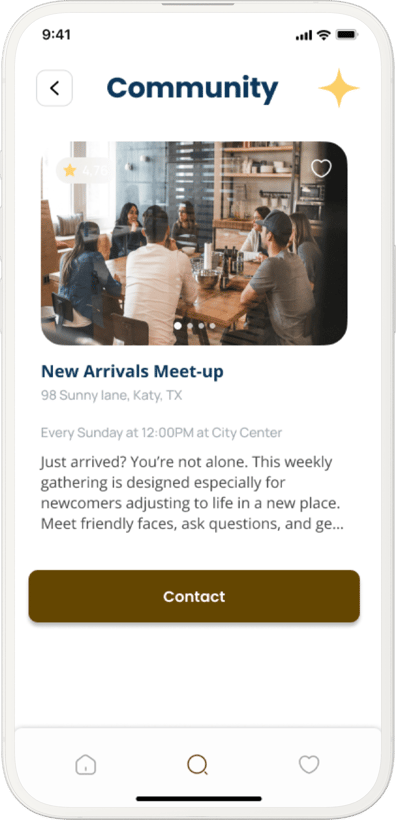
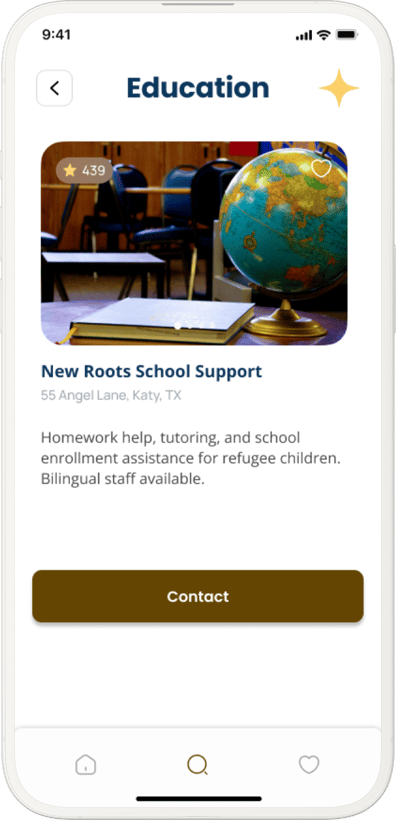
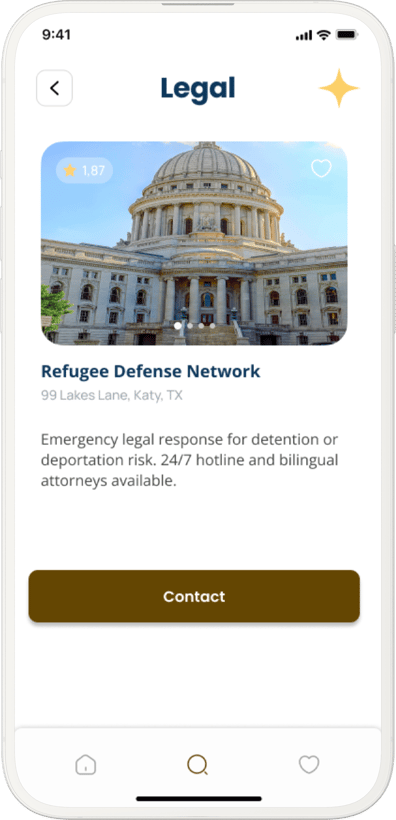
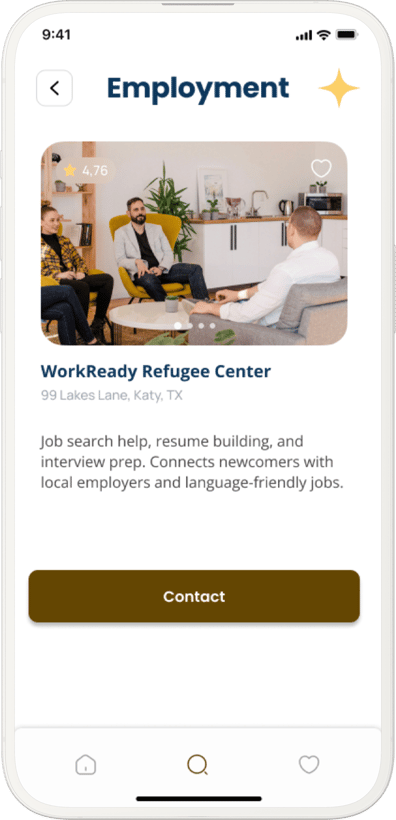
Key Features
Personalized Onboarding
Resource Finder
Legal Aid
Community Support
Users select their language, and location. This personalizes content and reduces cognitive load.
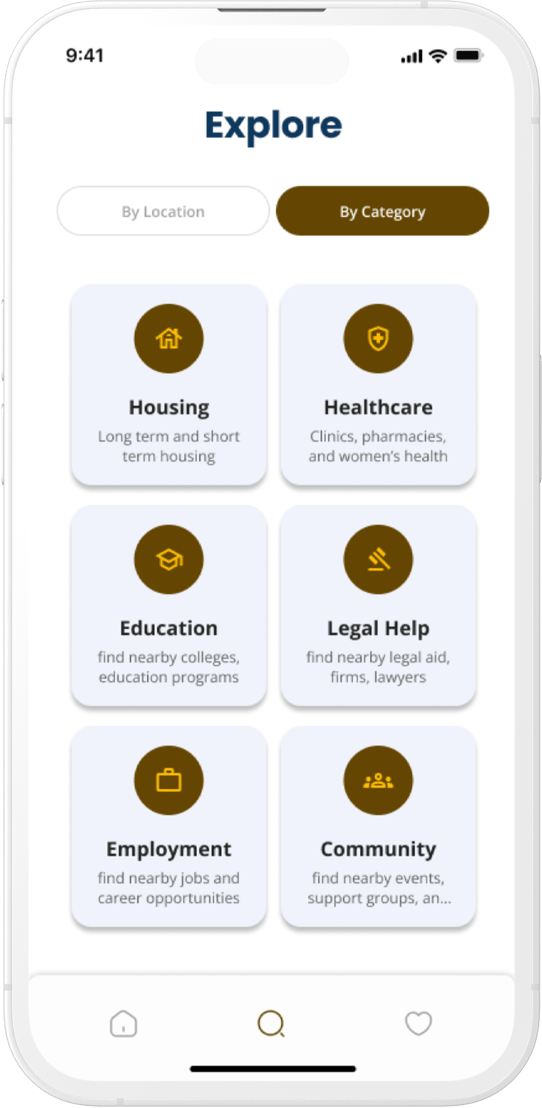
Search by category (housing, legal aid, healthcare, jobs), with map-based and list view options. Designed for simplicity and clarity.
Access legal resources and free/low-cost services. Reach out to vetted organizations. Find local events, support groups, and mentorship programs to build connection and reduce isolation.
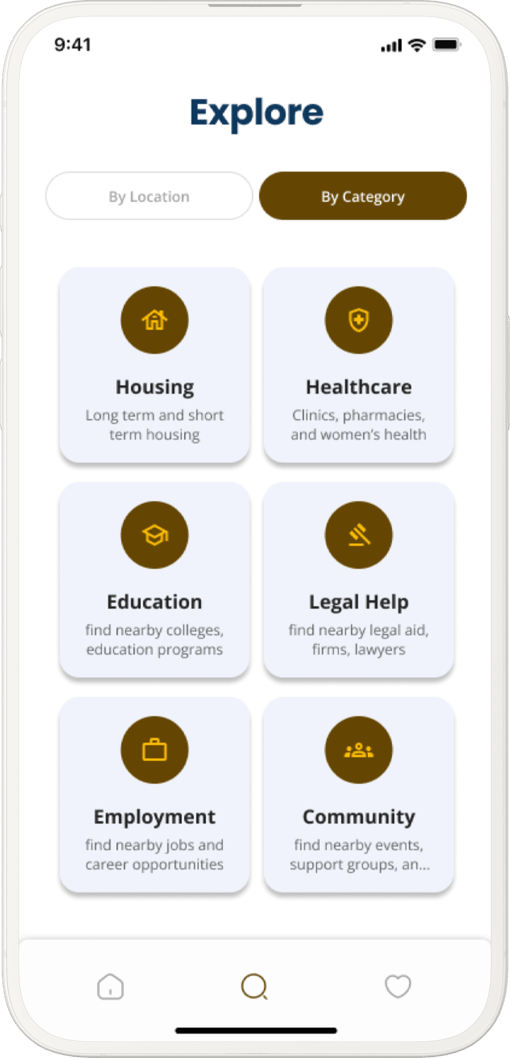
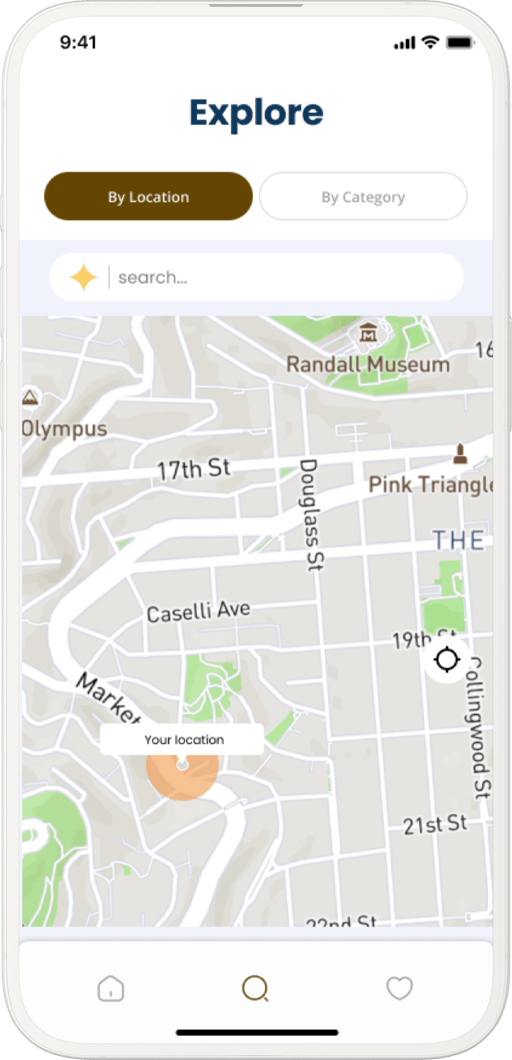
Search by category (housing, legal aid, healthcare, jobs), with map-based and list view options. Designed for simplicity and clarity.
Access legal resources and free/low-cost services. Reach out to vetted organizations. Find local events, support groups, and mentorship programs to build connection and reduce isolation.
Reflections
Next Steps
This project was deeply personal. I wanted to create a tool I wish existed when I needed it most — one rooted in clarity, empathy, and empowerment. This was more than a UX project — it was an act of healing. Designing for refugees from the inside out gave me insight into the kind of support systems we deserve.
-Usability testing with multilingual users
-Partner with refugee-led NGOs for real data and feedback
-Building a sustainable content management system for updates
-Partner with refugee-led NGOs for real data and feedback
-Building a sustainable content management system for updates
User Flow Highlights
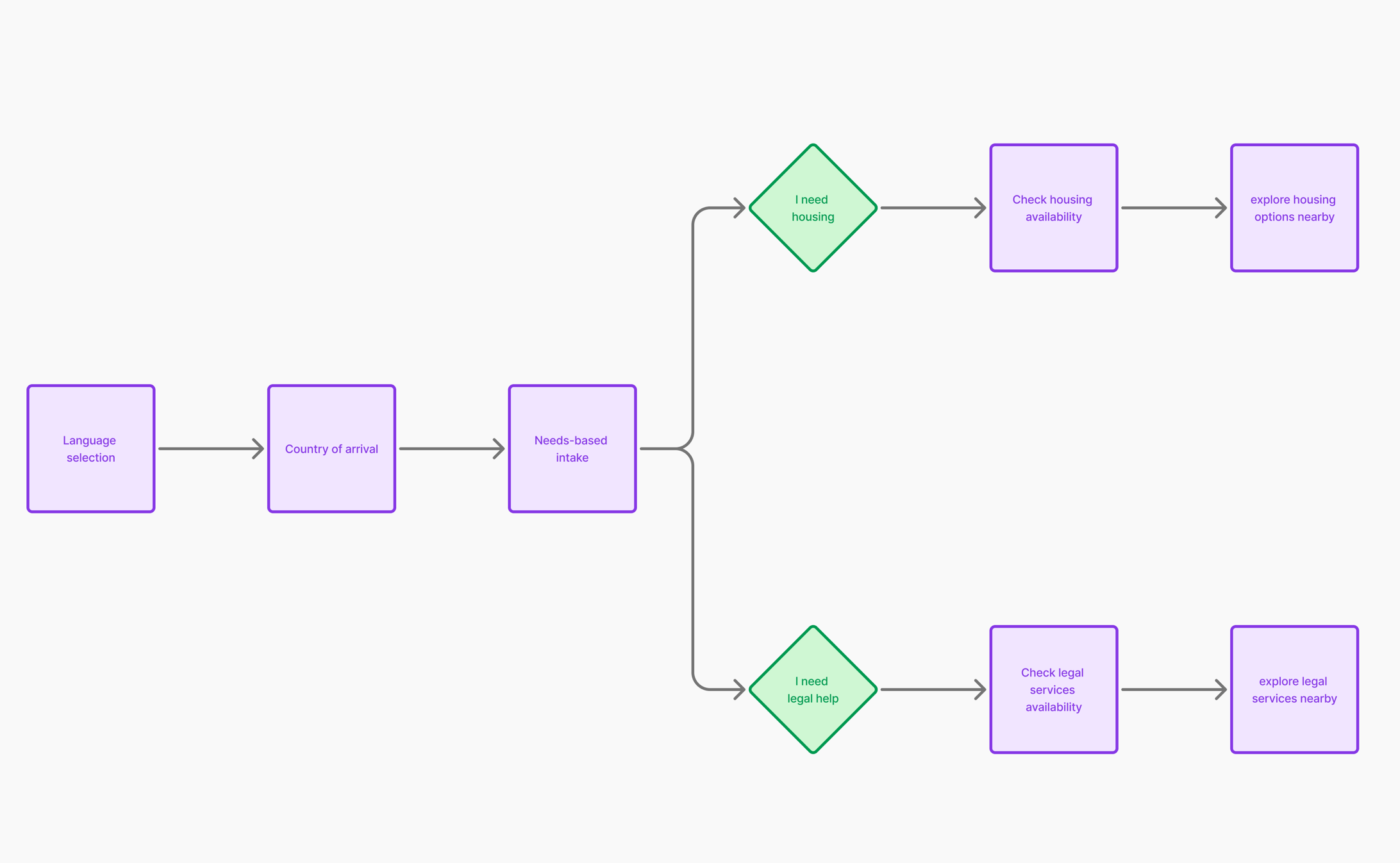
- Provide a centralized, easy-to-use platform for accessing essential refugee resources
- Offer multilingual support to increase accessibility
- Help users find legal aid, local services, and safe housing with minimal friction
- Design with empathy, cultural sensitivity, and simplicity at the core
Information Architecture
The platform is structured around four core areas:
- Resource Finder
Filter by location and category (housing, legal aid, healthcare, education, employment) - Legal Aid Access
Submit legal questions or connect with verified organizations offering free/low-cost services - Community Support
Find nearby events, support groups, and mentors